

Britt Slough Habitat Restoration
At the point where the Skagit River splits to form Fir Island, Skagit Fisheries completed a restoration project to reconnect Britt Slough and a large wetland complex to the South Fork of the Skagit River. The project was carried out on WDFW land situated between the dike and the South Fork, with engineering support from the Skagit Conservation District.
Why This Project Matters
This work is a key part of Chinook salmon recovery in the lower Skagit. Young Chinook need calm, slow-moving water as they make their way toward the estuary — places to rest and grow before reaching saltwater. That kind of off-channel and wetland habitat is increasingly rare in the lower Skagit floodplain, where most of the river is diked. Restoring access to this habitat gives juvenile Chinook a critical refuge during one of the most vulnerable stages of their lives.
What We Did
This project offered a rare opportunity to restore floodplain habitat on publicly owned land between the dike and the river. Skagit Fisheries staff, a Washington Conservation Corps crew, and student volunteers planted 5,280 trees along the restored channel and throughout the floodplain. Teams also conducted monitoring activities to document salmon use of the area before construction began.
What’s Next
We look forward to continuing monitoring efforts to track how salmon are using this newly reconnected habitat — and to telling the story of its recovery over time.
Pressentin Park Side Channel
Pressentin Park Side Channel Restoration — Marblemount
At Pressentin Park in Marblemount, Skagit Fisheries is restoring a half-mile historic side channel and reconnecting it to the Skagit River. Located on Skagit County Parks land, this Chinook recovery project extends far beyond salmon. It is also restoring habitat for diverse wildlife, supporting the recovery of endangered orcas, and bringing new recreational opportunities to the surrounding community.
Why This Project Matters
Access to side channel habitat is essential for Chinook salmon at multiple stages of their life cycle. The results were immediate: as soon as the restored channel was connected to the Skagit River, salmon moved in. Spawner survey volunteers documented adult Chinook, coho, and hundreds of pink salmon using the new habitat, and juvenile salmon are expected to follow.
What We Did
The restoration effort removed invasive plants from the floodplain and replanted over 12 acres of riparian area along the new channel with 13,000 native trees and shrubs. Skagit Fisheries also developed and installed interpretive signage throughout the park, highlighting the connections between riparian forest ecosystems, Native communities, salmon, and orcas.
The community showed up in a big way, with more than 120 volunteers participating in fall planting events. Even record flooding couldn’t slow them down, as volunteers returned as soon as the waters receded to continue the work.
What’s Next
Recreational improvements funded through grants secured by Skagit County are enhancing the park experience for visitors, including a new parking area, walking trails, bike-in campsites, picnic shelters, and a playground. We look forward to continued monitoring to document salmon use and track the long-term success of this restored habitat.
Little Careys
Near the small town of Hamilton, WA, Skagit Fisheries is working to bring a creek and wetland back to life.
The Big Picture
Little Carey’s Creek and the 22-acre wetland surrounding it were heavily altered over the years for farming — the forest was cleared and the creek was straightened and rerouted. We’re reversing that. By restoring the creek to its original path and rebuilding the wetland, we can bring back the healthy habitat that fish and wildlife depend on.
Progress So Far
In the winter of 2023–2024, staff and volunteers planted 12,000 native trees and shrubs along the creek bank. These plantings will shade the water, stabilize the soil, and provide food and shelter for wildlife as the area recovers.
What’s Next
This summer, we’ll restore the creek channel itself — redirecting the water back to its natural course through the forest. Once complete, the improved habitat will benefit coho salmon, resident trout, and both river and Pacific lamprey. These species were actually spotted spawning in this channel during a nearby project in 2019, so we know they’re ready to make use of restored habitat when it’s available.
Removing a Hidden Barrier
We’ve also added an exciting new phase to the project. Just downstream, a too-small culvert under Walders Road is quietly blocking fish from reaching nearly a mile of excellent upstream habitat. We’re replacing it with a 45-foot bridge and opening up the creek by removing a section of road entirely — letting the creek flow freely again, the way it used to. Design and permitting funding is secured, and we’re moving forward.
When this barrier comes down, fish like steelhead, coho salmon, cutthroat trout, and lamprey will be able to reach 13 acres of wetland and 0.75 miles of high-quality habitat that have been off-limits for years.
Building on Years of Work
This project is part of a long effort to heal the Carey’s Creek watershed. Over the years, Skagit Fisheries has restored parts of Carey’s Slough, Carey’s Lake, and a fish passage on Carey’s Creek in 2019. Each project makes the next one more impactful.
Funders
Puget Sound Energy (PSE) and the Washington State Department of Ecology (DOE)
East Fork Nookachamps Restoration Project
East Fork Nookachamps Creek Habitat Restoration
What We’ve Done
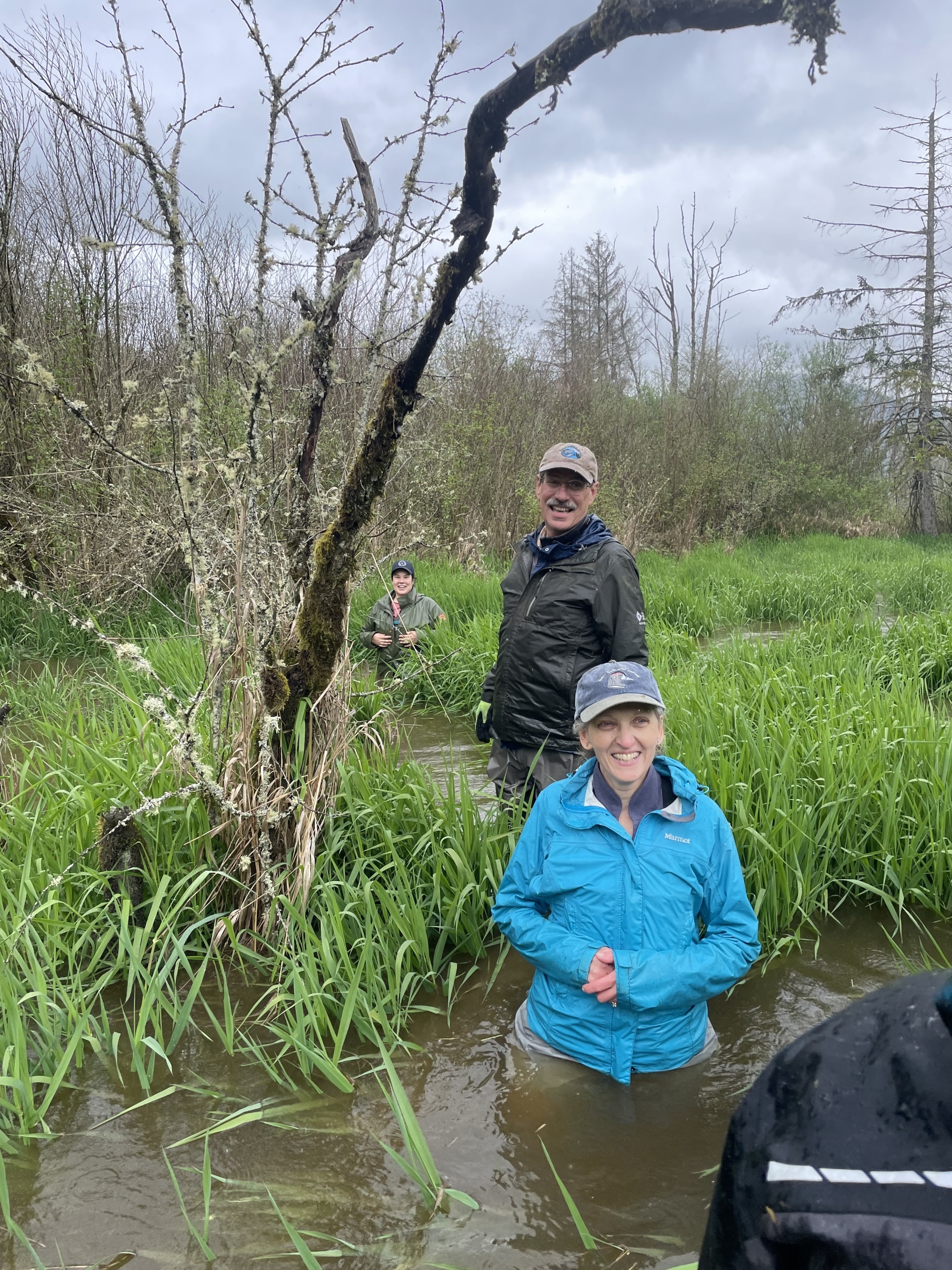
The first phase focused on riparian planting, with approximately 5,000 native trees and shrubs installed and maintained along the creek corridors.
What’s Next
Beginning in 2025, the project will explore options for improving fish passage and potential stream realignment on Kennedy Creek, along with design alternatives to enhance the existing wetland and floodplain areas of East Fork Nookachamps Creek.
Why It Matters
East Fork Nookachamps Creek supports seven species of salmon and trout, including Chinook, coho, chum, and pink salmon, steelhead, and coastal cutthroat trout. Bull trout have also been documented in the mainstem Nookachamps River. In October 2023, electrofishing surveys confirmed both Pacific lamprey and brook/river lamprey in East Fork Nookachamps Creek and Kennedy Creek, a notable finding for the region.
Beyond fish, the wetland habitats here provide valuable habitat for birds, amphibians, and other wildlife that will benefit from ongoing restoration efforts.
Our Partners
We are proud to collaborate with a private landowner, Skagit Land Trust, Upper Skagit Indian Tribe, and Skagit County. Funding for this project has been provided by the Skagit Conservation District, the Salmon Recovery Funding Board, and Puget Sound Energy.

Sign up for our e-newsletter!
Skagit Fisheries Enhancement Group
P.O. Box 2497
Mount Vernon, WA 98273
EIN: 94-3165939